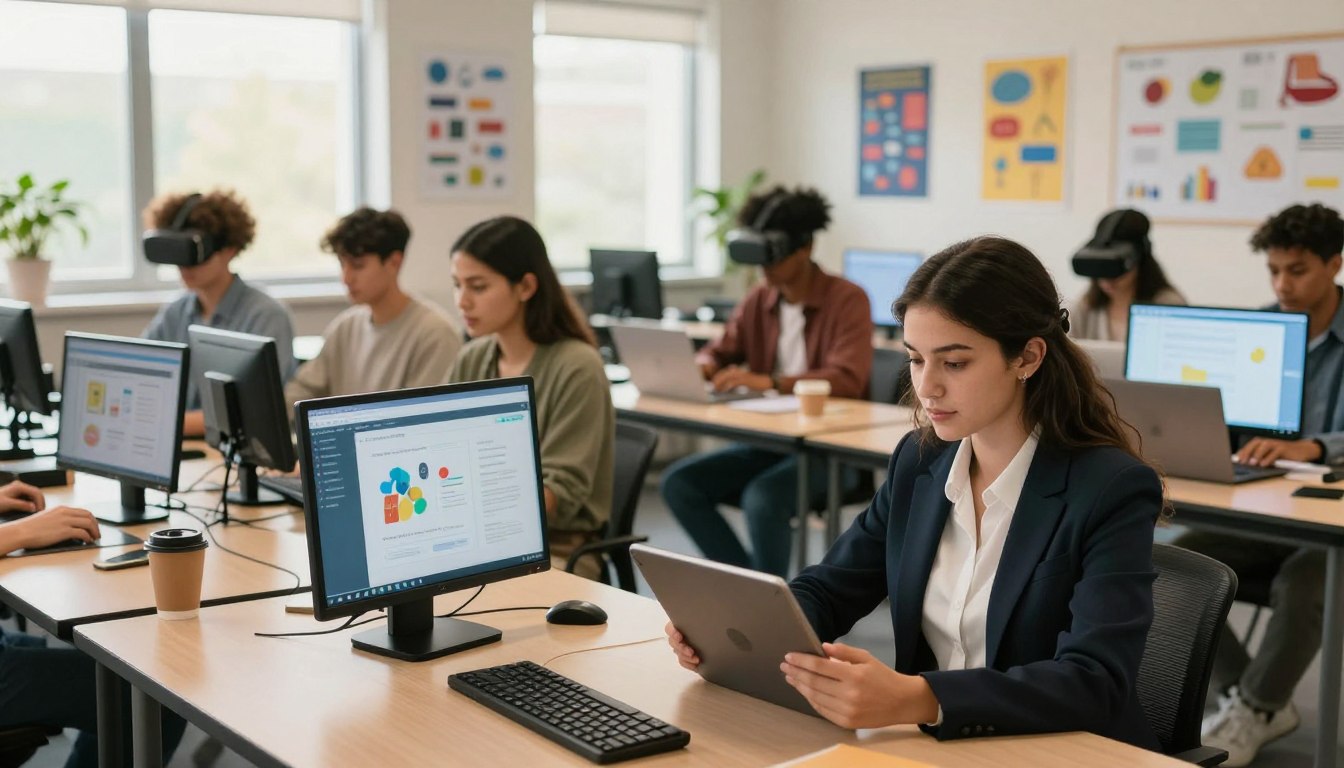
You are part of a rapidly evolving educational landscape where digital education is revolutionizing the way communities access learning opportunities.

With the rise of online learning platforms, geographical barriers are being broken, and access to education is becoming more equitable.
This shift is transforming the way you learn, making it more accessible and convenient.
Key Takeaways
- Digital education is increasing access to learning in communities.
- Online learning platforms are breaking geographical barriers.
- Education is becoming more equitable and accessible.
- Communities are benefiting from the flexibility of digital education.
- The future of learning is being reshaped by technology.
The Changing Landscape of Learning in American Communities
American communities are experiencing a transformation in education, moving beyond traditional models to more accessible and diverse learning environments. This shift is largely driven by the integration of digital learning resources, which are changing the way you access educational content.
Traditional vs. Modern Educational Access
In the past, educational access was often limited by geographical location and socioeconomic status. However, with the advent of digital learning, you’re now able to access a wealth of educational content from anywhere, at any time. This modern approach to education is breaking down traditional barriers and creating new opportunities for learners of all ages.

The Democratization of Knowledge
The democratization of knowledge is a key aspect of this educational transformation. Digital learning resources are making high-quality educational content more widely available, ensuring that you have equal access to information regardless of your background or location. This shift towards a more inclusive educational landscape is empowering communities and fostering a more educated and engaged citizenry.
What Is Digital Education and Why It Matters Today
Digital education is revolutionizing the way you access learning opportunities. It’s not just about using technology; it’s about creating a more inclusive, flexible, and personalized learning experience.
Core Components of Modern Digital Learning
Modern digital learning encompasses a range of tools and methodologies. These include educational media such as videos, podcasts, and interactive simulations that make learning more engaging.

The Shift from Institution-Centered to Learner-Centered Approaches
The traditional education system was often institution-centered, with a one-size-fits-all approach. Digital education shifts this focus to the learner, offering self-paced learning opportunities that cater to your individual needs.
Self-Paced Learning Opportunities
You can now learn at your own pace, revisiting complex topics as needed and accelerating through material you find easy.
Personalized Educational Pathways
Digital education also enables personalized educational pathways, where the content is tailored to your interests and career goals, making your learning experience more relevant and effective.
By embracing digital education, you’re not just gaining knowledge; you’re developing skills that are crucial in today’s digital economy.
How Digital Education Creates New Learning Opportunities
As you explore the world of digital education, you’ll discover new avenues for learning that transcend traditional boundaries. Digital education is not just about accessing information online; it’s about creating a more inclusive and accessible learning environment.
Breaking Down Traditional Barriers to Education
Digital education helps break down traditional barriers to learning, such as geographical constraints and rigid scheduling. With online courses and resources, you can learn at your own pace and according to your schedule.
Expanding Access Across Geographic Boundaries
One of the significant advantages of digital education is its ability to expand access across geographic boundaries. Whether you’re in a rural area or an urban city, you can access high-quality educational content.
Flexible Learning Models for Diverse Needs
Digital education offers flexible learning models that cater to diverse needs. This includes part-time and asynchronous learning, allowing you to balance education with other responsibilities.
Part-Time and Asynchronous Learning
Part-time and asynchronous learning models provide the flexibility you need to manage your time effectively. You can access course materials and learn at your own pace, without being tied to a traditional classroom schedule.
Microlearning and Skill-Based Education
Microlearning and skill-based education are other innovative approaches that digital education offers. These models focus on providing you with specific skills that are relevant to the current job market, making you more competitive.
By embracing digital education, you’re not only enhancing your access to education but also contributing to a more digitally inclusive community. This shift towards digital inclusion is crucial for promoting access to education for all.
Digital Inclusion: The Foundation of Educational Equity
Educational equity in the digital era hinges on the principle of digital inclusion. As you navigate the complexities of modern education, understanding the role of digital inclusion becomes crucial. Digital inclusion refers to the ability of individuals and communities to access and effectively utilize digital technologies.
Understanding the Digital Divide in America
The digital divide in America is a significant barrier to educational equity. It refers to the gap between those who have access to modern information and communication technologies and those who do not. This divide is often correlated with socioeconomic status, geographic location, and age.
Community-Based Solutions for Technology Access
Community-based initiatives play a vital role in bridging the digital divide. Public libraries, community centers, and non-profit organizations are working to provide access to digital technologies. For instance, many libraries offer free internet access and computer skills training.
Policy Initiatives Supporting Digital Inclusion
Policy initiatives are crucial for sustaining digital inclusion efforts. Governments and private entities are implementing policies to expand broadband access, promote digital literacy, and make digital technologies more affordable.
| Initiative | Description | Impact |
|---|---|---|
| Broadband Expansion | Expanding broadband infrastructure to underserved areas | Increased internet access |
| Digital Literacy Programs | Training programs to improve digital skills | Enhanced digital competency |
| Affordability Initiatives | Programs to make digital technologies more affordable | Increased access to digital technologies |
By understanding the digital divide and implementing community-based and policy initiatives, we can work towards achieving educational equity through digital inclusion.
Community Learning Hubs: Libraries and Centers Reimagined
Community learning hubs are at the forefront of the digital education revolution, offering a range of resources and support to learners of all ages. These hubs are transforming the way communities access education and technology.
The Evolution of Public Libraries in the Digital Age
Public libraries have long been cornerstones of community education. Today, they are evolving to meet the demands of the digital age. Many libraries now offer free Wi-Fi, device lending programs, and digital literacy workshops, making them indispensable resources for digital education.
Community Centers as Technology Access Points
Community centers are also being reimagined as technology access points. They provide critical infrastructure for digital inclusion, ensuring that all members of the community have access to the technology and skills needed to succeed in the digital economy.
Free Wi-Fi and Device Lending Programs
One of the key services offered by community learning hubs is free Wi-Fi and device lending programs. This initiative helps bridge the digital divide by providing access to the internet and digital devices for those who may not have them otherwise.
Digital Literacy Workshops and Support
In addition to providing technology access, community learning hubs offer digital literacy workshops and support. These programs help individuals develop the skills needed to effectively use digital technologies, enhancing their educational and economic opportunities.
| Services | Description | Benefits |
|---|---|---|
| Free Wi-Fi | Access to the internet | Enhanced connectivity for learning |
| Device Lending Programs | Borrowing digital devices | Increased access to technology |
| Digital Literacy Workshops | Training in digital skills | Improved digital competence |
“The transformation of public libraries and community centers into digital learning hubs is a significant step forward in promoting digital inclusion and educational equity.”
By reimagining community learning hubs, we can create more inclusive and equitable digital education ecosystems. These hubs play a vital role in supporting learners and fostering community development.
Rural Communities and the Digital Education Revolution
The digital education revolution is transforming the way rural communities access learning opportunities. As technology advances, rural areas are gaining new avenues for educational access, helping to bridge the gap between urban and rural educational outcomes.
Overcoming Infrastructure Challenges
Rural communities often face significant infrastructure challenges, including limited internet connectivity and outdated technology. To address these issues, initiatives such as satellite internet and mobile learning units are being implemented to enhance access to education.
Distance Learning Solutions for Remote Areas
Distance learning solutions are becoming increasingly popular in rural areas. Online courses and virtual classrooms provide students with the opportunity to engage in interactive learning experiences, regardless of their geographical location.
Success Stories: Rural Schools Transformed
Several rural schools have successfully integrated digital education into their curricula, resulting in improved educational outcomes. For instance, some schools have seen a significant increase in student engagement and academic performance.
These success stories highlight the potential of digital education to transform rural communities by providing new learning opportunities and enhancing access to quality education.
Urban Learning Transformation Through Digital Resources
The integration of digital resources in urban education is changing the way you learn. Urban areas are at the forefront of this educational transformation, leveraging technology to enhance learning experiences.
Addressing Educational Inequality in Cities
Digital education is playing a crucial role in bridging the educational gap in urban communities. By providing access to quality educational content, it’s helping to level the playing field for students from diverse backgrounds. You can see this in action through initiatives that offer free or low-cost digital learning materials.
Innovative Urban Digital Learning Initiatives
Cities are implementing innovative digital learning initiatives to improve educational outcomes. These include virtual mentorship programs, online tutoring services, and interactive learning platforms. Such initiatives are not only enhancing community education but also making learning more engaging and accessible.
Public-Private Partnerships Expanding Access
Public-private partnerships are crucial in expanding access to digital education in urban areas. By collaborating with tech companies and educational organizations, cities can leverage educational media to create comprehensive digital learning ecosystems. These partnerships are vital in ensuring that digital education is both sustainable and effective.
Together, these efforts are transforming urban learning, making it more inclusive and effective. As you look to the future, it’s clear that digital resources will continue to play a pivotal role in shaping education in urban communities.
Educational Media and Digital Learning Resources
As digital education continues to evolve, the way you access and utilize learning materials is undergoing a significant transformation. This change is driven by the need for more engaging, interactive, and personalized learning experiences.
The Evolution of Educational Content
The way educational content is created, disseminated, and consumed has changed dramatically. Traditional textbooks are no longer the sole source of information.
From Textbooks to Interactive Media
The shift from static textbooks to interactive digital media has enhanced learning opportunities. Interactive content such as videos, simulations, and gamified learning experiences make complex concepts more accessible and engaging.
Open Educational Resources (OERs)
Open Educational Resources (OERs) have democratized access to quality educational content. OERs are freely available, adaptable, and often collaboratively developed, reducing costs for learners and institutions.
Curating Quality Digital Learning Materials
With the vast amount of digital learning resources available, curating quality content is crucial. Educators and learners must be able to identify high-quality, relevant materials that align with learning objectives.
The Role of Media Literacy in Digital Education
As you navigate the digital learning landscape, media literacy becomes increasingly important. It enables learners to critically evaluate information, identify biases, and effectively use digital tools.
By embracing these changes and developing the necessary skills, you can maximize the benefits of digital learning resources and enhance your learning experiences.
Measuring the Community Impact of Digital Education
Digital education is not just about accessing information online; it’s about creating a ripple effect of positive change in communities. As you explore the impact of digital learning, you’ll discover its far-reaching benefits that extend beyond the individual learner to the community at large.
Economic Benefits and Workforce Development
One of the significant advantages of digital education is its contribution to economic growth and workforce development. By providing access to a wide range of courses and training programs, digital education helps individuals acquire new skills, making them more competitive in the job market. This, in turn, can lead to increased economic activity and a more robust workforce.
| Economic Indicator | Pre-Digital Education | Post-Digital Education |
|---|---|---|
| Unemployment Rate | 6% | 4% |
| Median Income | $40,000 | $50,000 |
| Business Startups | 100 | 150 |
Social Cohesion and Community Engagement
Digital education also plays a crucial role in fostering social cohesion and community engagement. Online platforms can connect people from diverse backgrounds, creating opportunities for collaboration and mutual understanding. This can lead to a more cohesive and engaged community, where individuals feel connected and valued.
Case Studies: Communities Transformed by Digital Learning
Several communities across the United States have experienced significant transformations thanks to digital education. Let’s look at a couple of examples:
The Appalachian Technology Initiative
This initiative focused on providing digital literacy training and access to technology in rural Appalachian communities. As a result, local residents were able to acquire new skills, find better job opportunities, and even start their own businesses.
Urban Digital Literacy Programs
In urban areas, digital literacy programs have helped bridge the digital divide, enabling residents to access essential services, participate in online education, and engage in the digital economy. These programs have been instrumental in promoting digital inclusion and community development.
As you can see, the impact of digital education on communities is profound and multifaceted. By understanding and leveraging these benefits, communities can continue to grow and thrive in the digital age.
Challenges and Barriers to Digital Education Access
As digital education continues to expand, it’s crucial to acknowledge the obstacles that hinder its accessibility. Despite the numerous benefits, various challenges affect the overall accessibility of digital education.
Infrastructure and Connectivity Issues
One of the primary barriers to digital education is the lack of adequate infrastructure and connectivity. Many communities, especially in rural areas, struggle with limited internet access and outdated technology, hindering their ability to fully participate in digital learning.
Digital Literacy and Technical Skills Gaps
Another significant challenge is the gap in digital literacy and technical skills. Both educators and learners need to possess the necessary skills to effectively utilize digital educational resources. Without these skills, the potential of digital education remains untapped.
Financial Constraints and Sustainability Concerns
Financial constraints also play a crucial role in limiting access to digital education. The cost of devices and internet services can be prohibitive for many individuals and communities.
Device Affordability
The affordability of devices such as laptops and tablets is a significant concern. Many families cannot afford these devices, making it difficult for them to access digital educational content.
Ongoing Support and Maintenance
Moreover, the need for ongoing support and maintenance of digital infrastructure adds to the financial burden. Ensuring that digital education systems remain functional and up-to-date requires continuous investment.
In conclusion, addressing these challenges is essential to ensure equitable access to digital education. By understanding and mitigating these barriers, we can work towards a more inclusive digital learning environment.
The Future of Digital Education in American Communities
The future of digital education in American communities is poised to revolutionize the way you access knowledge. As technology continues to advance, new opportunities for learning are emerging, making education more accessible and inclusive.
Emerging Technologies Expanding Access
Technologies such as artificial intelligence and virtual reality are at the forefront of this revolution. They are not only enhancing the learning experience but also making it more engaging and interactive.
Artificial Intelligence and Adaptive Learning
Artificial intelligence (AI) is being used to create adaptive learning systems that adjust to individual learners’ needs, providing a more personalized education experience. AI-powered tools can analyze vast amounts of data to identify knowledge gaps and suggest tailored learning paths.
Virtual Reality and Immersive Education
Virtual reality (VR) is transforming the way we learn by providing immersive, interactive experiences. VR enables students to explore complex concepts in a hands-on manner, making learning more effective and enjoyable.
Trends in Community-Based Digital Learning
Community-based digital learning is becoming increasingly popular, with local centers and libraries serving as hubs for digital education. These initiatives are helping to bridge the digital divide and ensure that everyone has access to quality learning resources.
| Trend | Description | Impact |
|---|---|---|
| Increased Accessibility | Digital learning resources are becoming more accessible to communities nationwide. | More people can access quality education. |
| Personalized Learning | AI and other technologies are enabling personalized learning experiences. | Improved learning outcomes. |
| Community Engagement | Local centers are becoming hubs for digital learning, fostering community engagement. | Stronger, more connected communities. |
Preparing for the Next Generation of Learners
As digital education continues to evolve, it’s essential to prepare for the next generation of learners. This involves not only adopting new technologies but also ensuring that educators are equipped to effectively integrate these tools into their teaching practices.
Conclusion: Embracing the Digital Transformation of Community Learning
As we have explored throughout this article, digital education is revolutionizing the way communities access learning opportunities. By embracing digital inclusion, you can be part of a movement that is breaking down traditional barriers to education and fostering a more equitable learning environment.
Community education is at the forefront of this transformation, with initiatives that promote digital literacy, provide access to quality educational resources, and support lifelong learning. As a member of your community, you have the power to drive this change forward.
By leveraging digital technologies and resources, you can expand your knowledge, enhance your skills, and contribute to the growth and development of your community. Whether you are a student, educator, or simply a lifelong learner, the opportunities presented by digital education are vast and varied.
As we move forward, it is essential to continue investing in digital inclusion initiatives and community education programs that promote equal access to learning opportunities. By doing so, we can create a brighter future for all members of our community, regardless of their background or socioeconomic status.
FAQ
What is digital education, and how does it impact community learning?
Digital education refers to the use of digital resources and technology to enhance learning opportunities. It has transformed community learning by increasing access to education, improving educational outcomes, and providing flexible learning models that cater to diverse needs.
How does digital education address the digital divide in America?
Digital education addresses the digital divide by providing community-based solutions for technology access, promoting digital literacy, and supporting policy initiatives that foster digital inclusion. This helps ensure equal access to education for all members of the community.
What role do community learning hubs play in digital education?
Community learning hubs, such as public libraries and community centers, provide technology access, digital literacy support, and other resources that help bridge the digital divide. They serve as vital infrastructure for promoting digital education in local communities.
How is digital education transforming rural communities?
Digital education is transforming rural communities by overcoming infrastructure challenges, providing distance learning solutions, and promoting innovative educational initiatives. This helps expand access to education and improve educational outcomes in rural areas.
What are the benefits of digital education for workforce development?
Digital education provides numerous benefits for workforce development, including improved skills training, increased access to education, and enhanced employability. This helps individuals acquire the skills needed to compete in the modern economy.
What challenges and barriers remain to be addressed in digital education?
Challenges and barriers to digital education include infrastructure and connectivity issues, digital literacy gaps, financial constraints, and device affordability concerns. Addressing these challenges is crucial to ensuring equal access to digital education.
How can emerging technologies like AI and VR enhance digital education?
Emerging technologies like AI and VR can enhance digital education by providing personalized learning experiences, improving educational outcomes, and increasing learner engagement. These technologies have the potential to revolutionize the way we learn.
What is the future of digital education in American communities?
The future of digital education in American communities is promising, with emerging technologies, trends in community-based digital learning, and a growing focus on preparing for the next generation of learners. As digital education continues to evolve, it is likely to have a profound impact on community learning.